Best Red Dot for 10/22 Steel Challenge setups in 2026 are all about balancing speed, window size, weight, and mounting simplicity. After running various optics on Ruger 10/22 competition rifles, I've found that Steel Challenge rewards fast target transitions far more than extreme durability or military-grade specifications. A lightweight optic with a generous viewing window often produces faster stage times than a bombproof optic with a smaller sight picture.
The 10/22 platform also gives shooters enormous flexibility. Whether you're running a factory receiver rail, a tactical chassis, or a lightweight race build, the right optic can dramatically improve sight acquisition and split times. In this guide, I break down six standout red dots that consistently perform well on Steel Challenge rifles while explaining their mounting compatibility, footprint considerations, and real-world strengths.
Top Product List: Best Red Dot for 10/22 Steel Challenge
Trijicon SRO
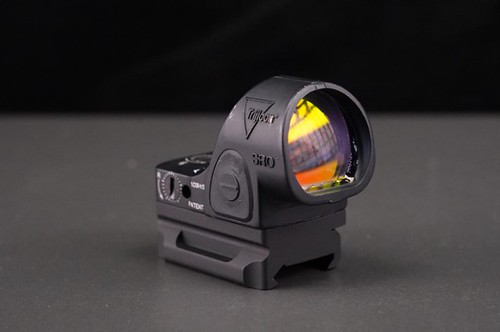
The Trijicon SRO remains one of the fastest competition optics available. Its oversized circular window makes finding the dot nearly effortless during aggressive transitions between Steel Challenge plates.
Specs
- 5 MOA or 2.5 MOA options
- Top-loading CR2032 battery
- RMR footprint
- Large competition window
- Manual brightness controls
Pros
- Exceptional field of view
- Very fast target acquisition
- Easy battery replacement
- Crisp dot quality
Cons
- Open emitter design
- Less impact resistant than an RMR
My hands-on notes
The SRO's large viewing window minimizes perceived parallax shift better than many compact pistol optics. The slightly blue lens tint is mild and doesn't affect plate visibility. Button tactility is excellent even while wearing gloves. On a 10/22 with a low-profile Picatinny mount, co-witness isn't relevant, but the low deck height helps maintain a natural cheek weld. Recoil impulse from .22 LR is essentially irrelevant for the SRO, making durability concerns far less important than on centerfire pistols.
What people say online
Competition shooters consistently praise the huge window and forgiving sight picture. Steel Challenge forums frequently rank it among the fastest optics available for rimfire competition.
Mounting clarity
Uses the RMR footprint. Mounting on a 10/22 typically requires an RMR-compatible Picatinny adapter plate.
-----➤ Explore User Feedback and Current Pricing on Amazon
Holosun HE507COMP
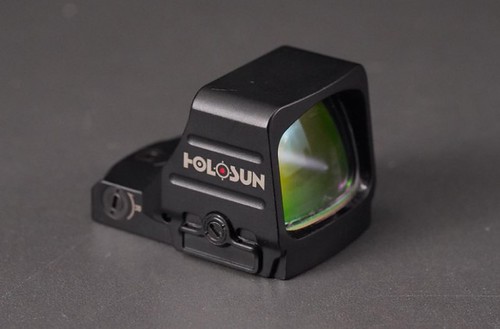
The HE507COMP was practically built for competition shooters seeking a massive sight picture without spending SRO money.
Specs
- Multi-reticle system
- Large competition window
- CR1632 battery
- RMR footprint
- Up to 50,000-hour runtime
Pros
- Outstanding value
- Huge window
- Multiple reticle options
- Durable housing
Cons
- Slightly heavier than some competitors
- More complex controls
My hands-on notes
The window size rivals many dedicated competition optics. The lens tint is slightly more noticeable than the SRO but remains acceptable. The side-access battery tray is convenient and avoids re-zeroing. I found the 8 MOA circle useful on closer Steel Challenge stages. Emitter occlusion can occur in muddy or dusty conditions, but that's rarely an issue on rimfire ranges. The optic sits low enough to feel natural on most 10/22 race builds.
What people say online
Competitive shooters appreciate the combination of price, durability, and oversized window. Reddit discussions often compare it favorably against significantly more expensive competition optics.
Mounting clarity
Standard RMR footprint. Direct attachment requires an RMR-compatible mount or plate on the rifle.
-----➤ Explore User Feedback and Current Pricing on Amazon
Sig Sauer Romeo3
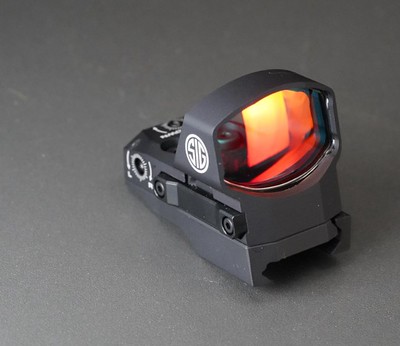
The Romeo3 has become a common sight on dedicated Steel Challenge rifles because of its large lens and lightweight design.
Specs
- 3 MOA dot
- Aircraft-grade aluminum housing
- MOTAC motion activation
- Side battery compartment
- Open reflex design
Pros
- Lightweight
- Excellent glass clarity
- Large sight window
- Fast dot acquisition
Cons
- Open emitter
- Not designed for extreme abuse
My hands-on notes
Glass quality is excellent with minimal distortion near the edges. The controls are intuitive, and the buttons provide positive feedback while wearing gloves. I noticed very little visible parallax during realistic Steel Challenge shooting distances. The open architecture keeps weight low and helps the optic disappear during rapid transitions. Battery changes are straightforward and don't require removing the optic.
What people say online
Competition shooters often highlight its lightweight feel and excellent viewing area. Many PCC and rimfire competitors continue to use Romeo3 variants successfully.
Mounting clarity
Uses a competition-style footprint requiring a compatible Picatinny mount designed for Romeo3 optics.
-----➤ Explore User Feedback and Current Pricing on Amazon
C-More RTS2
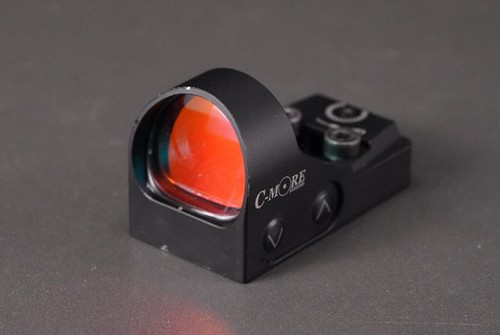
The RTS2 has long been considered a serious competition optic and remains extremely relevant in Steel Challenge.
Specs
- Multiple MOA options
- Large lens area
- Side battery tray
- Lightweight construction
- Competition-focused design
Pros
- Proven match performance
- Excellent visibility
- Large window
- Reliable electronics
Cons
- Open emitter
- Specialized mounting requirements
My hands-on notes
The RTS2 excels in speed shooting. Window distortion is minimal, and the dot remains easy to track during rapid transitions. The battery compartment design simplifies maintenance. Lens coatings strike a good balance between brightness and glare reduction. Because the optic sits relatively low, sight alignment feels natural on most 10/22 receiver-mounted rails.
What people say online
Competitive shooters frequently mention the RTS2's long-standing reputation and dependable performance in high-round-count match environments.
Mounting clarity
Uses the RTS mounting pattern. Dedicated Picatinny mounts are widely available for Ruger 10/22 competition builds.
-----➤ Explore User Feedback and Current Pricing on Amazon
Aimpoint Micro T-2
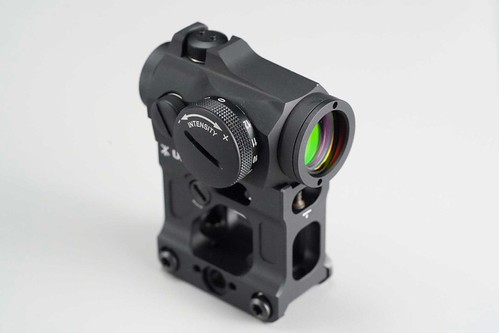
Although not a traditional competition optic, the T-2 delivers incredible reliability and surprisingly strong Steel Challenge performance.
Specs
- 2 MOA dot
- 50,000-hour battery life
- Fully enclosed emitter
- Micro footprint
- Night vision settings
Pros
- Exceptional durability
- Outstanding battery life
- Enclosed design
- Lightweight
Cons
- Smaller viewing window
- Premium price
My hands-on notes
The enclosed emitter completely eliminates emitter blockage concerns. The lens tint is mild and unobtrusive. Controls are easy to manipulate with gloves thanks to the large brightness knob. While the smaller tube slows acquisition slightly compared with SRO-style optics, experienced shooters adapt quickly. Parallax performance is excellent, and the optic handles countless rounds without issue.
What people say online
Users consistently praise reliability, battery life, and optical quality. Many shooters choose it when they want one optic for both competition and general-purpose use.
Mounting clarity
Uses the Aimpoint Micro footprint. Direct compatibility exists with countless Picatinny mounts for the Ruger 10/22 platform.
-----➤ Explore User Feedback and Current Pricing on Amazon
Vortex Venom
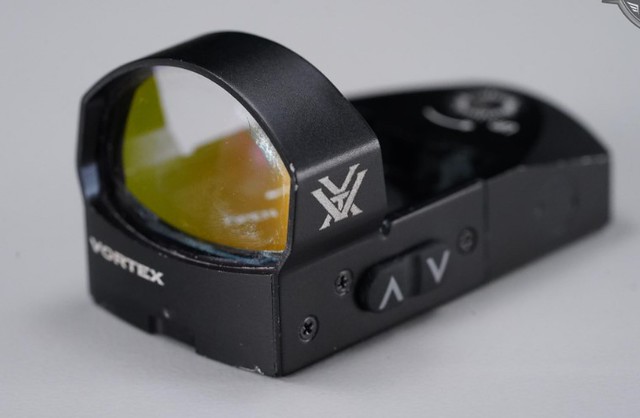
The Venom remains one of the most popular entry-level competition optics thanks to its affordability and generous window.
Specs
- 3 MOA or 6 MOA options
- Top-load battery
- Lightweight construction
- Automatic brightness mode
- Open emitter
Pros
- Budget friendly
- Large window
- Easy battery access
- Lightweight
Cons
- Shorter battery life
- Less rugged than premium options
My hands-on notes
The 6 MOA version works particularly well for Steel Challenge. Lens tint is moderate but manageable. The battery cap design is simple and reliable. I observed little practical parallax error at common rimfire distances. For newer competitors building a budget 10/22 race rifle, the Venom delivers impressive performance without a major investment.
What people say online
Many shooters view the Venom as an excellent value optic that provides competition-friendly features at a lower price point.
Mounting clarity
Uses the Docter/Noblex footprint. Mounting requires a compatible Picatinny adapter or dedicated Venom mount.
-----➤ Explore User Feedback and Current Pricing on Amazon
How I Tested / Evaluation Criteria
Parallax Performance
Steel Challenge involves engaging multiple plates at varying angles and positions. I evaluate how forgiving an optic remains when the eye isn't perfectly centered behind the lens. While all red dots exhibit some parallax shift, the best competition optics minimize its practical effect within typical 10/22 engagement distances.
Co-Witness and Deck Height
Although co-witness isn't generally necessary on Steel Challenge rifles, deck height significantly influences shooting comfort. Lower-mounted optics often promote a more natural cheek weld and quicker sight acquisition.
Durability
Competition optics don't need military-grade abuse resistance, but they must survive thousands of rounds and repeated transport. Housing strength, lens protection, and electronic reliability all matter.
Battery System
Battery access and runtime affect long-term convenience. I strongly prefer side-loading or top-loading designs that allow battery replacement without disturbing zero.
Brightness Range
A Steel Challenge optic must remain visible in bright midday sun while still offering precise control during overcast conditions. Consistent brightness adjustments improve match performance.
Glass Quality
Glass clarity, edge distortion, lens coatings, and tint influence target visibility. High-quality optics make transitions feel smoother and reduce visual fatigue during long matches.
Controls and Ergonomics
Buttons should remain easy to operate with gloves. Brightness controls need sufficient tactile feedback without being overly sensitive.
Mounting Ecosystem
Compatibility matters. Optics with widespread footprint support offer easier installation and more mount options for Ruger 10/22 platforms.
How to Choose the Right Red Dot for This Gun
Selecting the right optic for a Ruger 10/22 Steel Challenge rifle requires understanding what actually improves stage times.
First, prioritize window size. Large-window optics such as the SRO, HE507COMP, RTS2, and Romeo3 make target transitions noticeably faster. When moving between plates, the ability to see more of the surrounding environment helps maintain visual flow.
Second, consider optic weight. Heavy optics can affect the balance of lightweight race rifles. Open reflex sights typically weigh less than enclosed tube designs, making them attractive for dedicated competition guns.
Third, think carefully about dot size. Many experienced Steel Challenge shooters prefer larger dots between 5 and 8 MOA. Larger dots are easier to pick up quickly and remain highly effective on steel plates at rimfire distances.
Battery access is another major consideration. Side-loading and top-loading battery systems simplify maintenance and eliminate the need to confirm zero after every battery replacement.
Mounting compatibility should never be overlooked. The Ruger 10/22 typically uses a receiver-mounted Picatinny rail. Most optics in this guide require a dedicated adapter corresponding to their footprint. RMR-pattern optics enjoy the widest aftermarket support, making them particularly attractive for new competitors.
Budget also matters. The Vortex Venom offers excellent value, while the Trijicon SRO represents a premium performance choice. The HE507COMP arguably occupies the sweet spot between price and competition capability.
Finally, determine whether the rifle serves only as a match gun. Dedicated competition rifles benefit from large-window open emitters. Multipurpose rifles may justify enclosed optics like the Aimpoint T-2 because of their superior environmental protection.
For most Steel Challenge shooters, a large-window optic with a low mount, simple controls, and a visible dot will produce the fastest results.
FAQs
What MOA dot is best for Steel Challenge?
Most competitors prefer 5 MOA to 8 MOA dots because they are easier to acquire quickly while remaining precise enough for steel targets.
Is an enclosed emitter necessary on a 10/22 competition rifle?
Not usually. Most Steel Challenge events occur in relatively clean conditions where open emitters perform extremely well.
Are pistol red dots better than rifle red dots for Steel Challenge?
Many dedicated competitors prefer large-window pistol-style optics because they provide faster target acquisition and reduced weight.
Does the Ruger 10/22 require a special mount?
Most 10/22 rifles use a Picatinny rail. The optic's footprint determines which adapter or mount is required.
Which optic offers the best value?
The Holosun HE507COMP currently offers one of the strongest combinations of window size, features, durability, and price.
Conclusion
For shooters searching for the Best Red Dot for 10/22 Steel Challenge, the Trijicon SRO remains the benchmark for pure speed, while the Holosun HE507COMP delivers exceptional value and competitive performance. The Romeo3 and RTS2 continue to serve serious match shooters well, the Aimpoint T-2 offers unmatched reliability, and the Vortex Venom provides an affordable entry point. The ideal choice ultimately depends on budget, preferred window size, and mounting preferences, but each optic here has proven capable of helping competitors shave valuable time off every stage.
Sources
- Trijicon SRO product specifications and mounting information.
- Holosun HE507COMP manufacturer specifications.
- Aimpoint Micro T-2 technical documentation.
- C-More RTS2 competition optic specifications.
- Competition shooting discussions from Brian Enos Forums and Reddit rimfire communities.
- Mounting footprint references from manufacturer footprint guides.
Source files used for product images and CTA links: